
For a long time, there’s been an asterisk next to job costing in ServiceM8.
If you invoiced jobs in one go, things generally made sense.
If you used partial invoicing… not so much. And plenty of you told me about it.
The problem people kept running into
When jobs were invoiced in stages, the job costing figures didn’t always line up with reality. Revenue and costs could drift out of sync, which meant reports didn’t fully reflect what was actually happening on the job.
For those of you trying to answer questions like:
- “Did this job actually make money?”
- “How profitable was this work once everything was invoiced?”
- “Can I trust these numbers?”
…that was a problem.
Some of you ended up working around it manually.
Others paid for third-party reporting tools like Wink Reports just to get clarity – which worked, but came at an extra cost and added complexity.
Not ideal.
What’s changed with the partial invoicing fix
ServiceM8 have now addressed this properly.
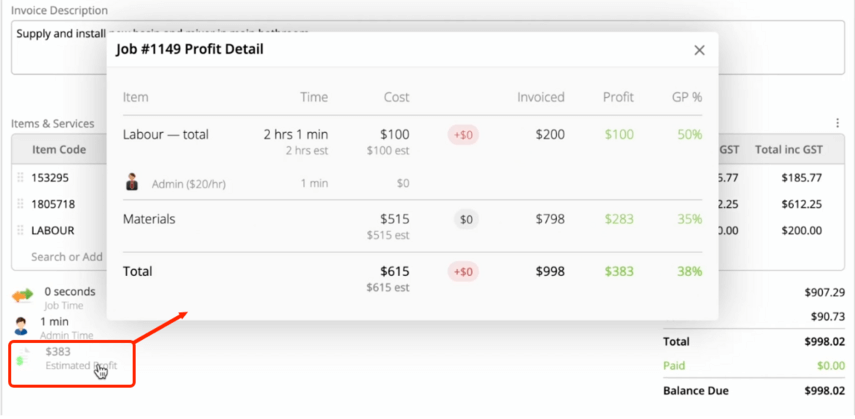
With the partial invoicing fix, job costing reports now correctly account for jobs that are invoiced in stages. Revenue, costs, and margins stay aligned as invoices are raised – not just at the very end.
In practical terms, that means:
- job profitability makes sense again
- partially invoiced jobs no longer distort reports
- margins update accurately as invoices go out
- you don’t have to “wait until the final invoice” to see the truth
This was a reporting issue, not a user error – and it’s been fixed at the source.
ServiceM8 have outlined the details here:
Why this matters going into 2026
A lot of businesses avoided using job costing fully because they didn’t trust it under partial invoicing. And honestly, that caution made sense.
But with this fix in place, the Job Costing add-on is now something you can actually rely on – even if:
- you invoice deposits
- you stage payments
- you invoice variations separately
- or jobs span weeks or months
This means that job costing can finally do what it’s meant to do: help you understand which work is genuinely profitable, without mental gymnastics or bolt-on reports.
If you’ve previously ignored job costing because partial invoicing made it unreliable, it’s worth revisiting now.
And if you’ve been paying extra just to work around this issue, you might find you no longer need to.
A couple of questions for you:
- Have you been trusting your job costing numbers up to now – or working around them?
- If those figures were finally reliable, what decisions would you make differently?
Sometimes progress isn’t about adding more features.
It’s about fixing the ones people stopped trusting.

