
If you’re anything like me, you probably keep a pretty close eye on revenue and profit every week. You know what’s been invoiced, what’s been paid, and whether the numbers are heading in the right direction.
What’s easy to miss is that you can now see far more time-based insight in ServiceM8 than ever before – and that time data is just as important as the money.
Because time and success are tightly linked.
Customers now expect speed as standard. Fast booking of site surveys. Quotes sent the same day. Work scheduled quickly once they say yes. When things feel slow, it’s rarely because the work itself takes too long – it’s because jobs stall between steps.
That’s exactly what the new AI reporting durations expose.
Why I pushed for these durations to exist
When ServiceM8’s senior leadership team asked for feedback on the new AI reporting suite, this was my ask:
Don’t just show outcomes.
Show how long everything takes.
Not one timestamp. Not two.
But enough time markers to understand how a job really moves from created → completed → paid.
What we have now is a set of durations that finally make delays, friction, and bottlenecks visible – without guesswork.
Revenue tells you what. Durations tell you where it slows down.
Most jobs follow the same basic journey. The AI reporting suite now measures the time spent between each stage, using durations like these:
Job Created
  → Quote Sent
  → Work Order
  → Scheduled
  → Completed
  → Invoice Sent
  → Paid

The power isn’t in any single duration - it’s in comparing them.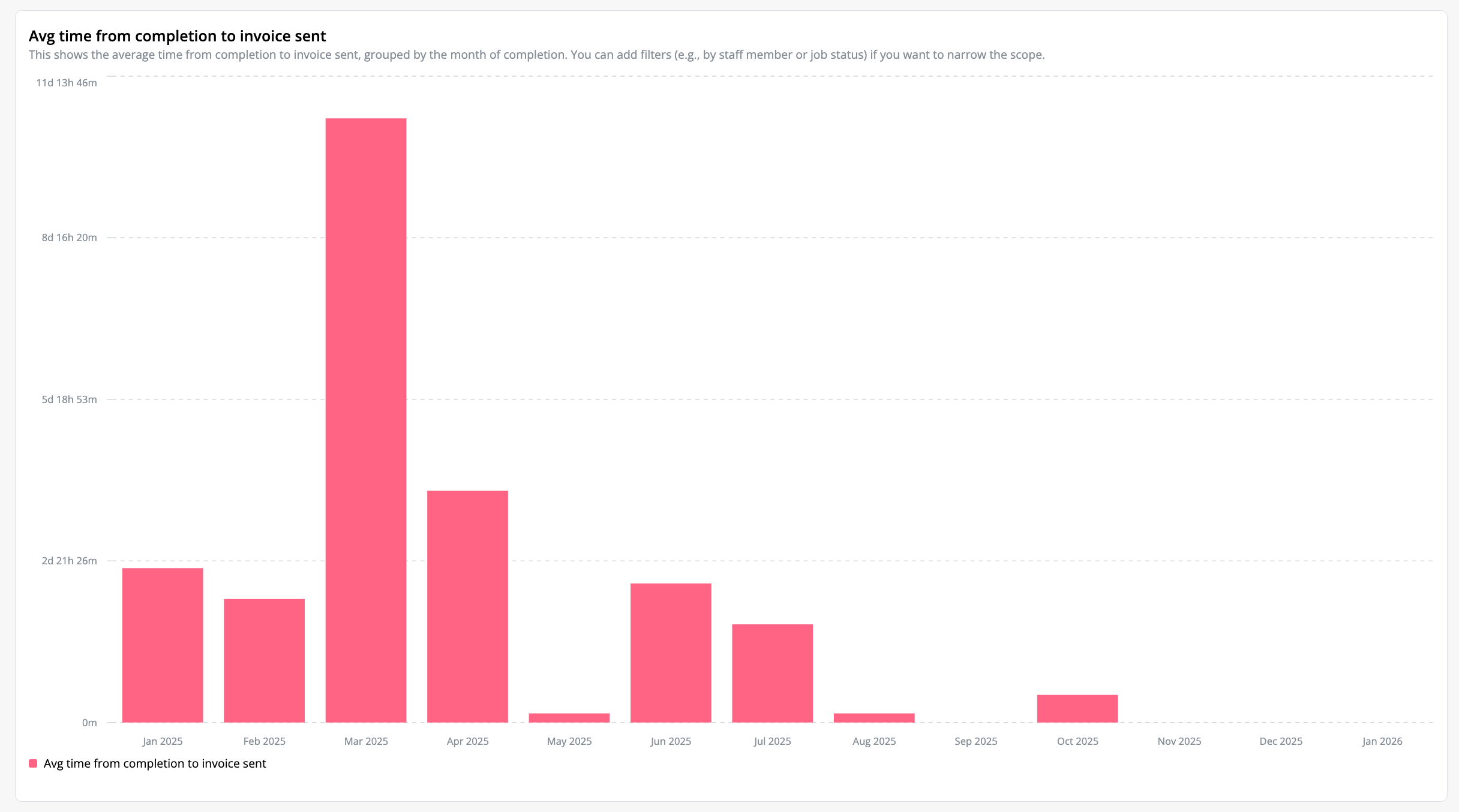
What the key durations actually tell you
Time to Quote Sent
(Job Created → Quote Sent)
How responsive are we to new enquiries?
Because most jobs are created at quote status, this is the quoting metric that actually matters.
This duration shows:
- how quickly enquiries are picked up
- whether quotes sit unfinished
- how responsive your business feels to customers
Long times here usually mean lost work, even if pricing is fine.
Time from Quote Sent to Work Order
How long customers take to say yes
This is a customer-behaviour metric.
It helps you understand:
- how long quotes sit before approval
- whether follow-ups are effective
- which types of work convert fastest
It’s particularly useful for spotting quotes that are unlikely to convert at all.
Time from Work Order to Scheduled
How fast “yes” turns into action
This shows how long approved work sits before it’s booked in.
Long durations here often point to:
- unclear scheduling ownership
- capacity issues
- jobs being approved and then forgotten
From the customer’s point of view, this is where confidence can wobble.
Time from Work Order to Completed
How long delivery actually takes
This measures the real execution window of a job.
Useful for:
- comparing expected vs actual job duration
- spotting jobs that drag on
- identifying services that consistently overrun
This feeds directly back into pricing and estimating.
Time to Completed
(Job Created → Completed)
End-to-end operational speed
This shows how long a job lives in your system.
It’s a strong indicator of:
- efficiency
- workload pressure
- process health
Compare this across job types, engineers, or clients and patterns jump out very quickly.
Time from Completed to Invoice Sent
How fast work turns into an invoice
This one directly affects cashflow.
If this duration is long, it usually means:
- admin delays
- manual invoicing habits
- uncertainty around sign-off
Ideally, this is same day.
Time from Invoice Sent to Payment
How long customers take to pay
This reflects:
- client type
- clarity of invoices
- payment options and reminders
Segment this by customer or job type and the patterns are usually obvious.
Time from Completion to Payment
How long completed work ties up your cash
This combines invoicing speed and customer payment behaviour.
Two businesses can invoice the same amount – but the one with shorter completion-to-payment times will always feel calmer and more in control.
Time to Work Order / Time to Unsuccessful
What happens to enquiries after they come in
These durations help you see:
- how long it takes for enquiries to turn into real work
- how long unsuccessful jobs linger
- whether leads are being actively managed or ignored
This is especially useful for spotting quiet pipeline problems.
If you only track three durations, start here
If all of this feels like a lot, focus on these first:
- Time to Quote Sent (Responsiveness and conversion)
- Time from Work Order to Scheduled (Momentum and customer experience)
- Time from Completed to Invoice Sent (Cashflow discipline)
Shorten these three and most businesses feel an improvement without doing more work.
This is exactly why I asked for these durations to be included.
Not to create prettier reports – but to make delays obvious, measurable, and fixable.
So I’ll leave you with a few questions:
- Which of these durations do you suspect is longest in your business?
- Where do jobs tend to stall once they’ve started?
- Are you tracking revenue because it’s easy – or because it tells you enough?
This is where reporting stops being about numbers and starts being about control.

